


Benefits of Stainless Steel Water Filters: A 2026 Guide
Table of Contents
Why Stainless Steel Water Filters Outperform Plastic
The Core Benefits of Stainless Steel Water FiltersCorrosion Resistance and Structural IntegrityEliminating Chemical Leaching and Microplastic Exposure
Corrosion Resistance and Structural Integrity
Eliminating Chemical Leaching and Microplastic Exposure
Stainless Steel vs Plastic Water Filter Housings: A Comparison
Grade Matters: 304 vs 316 Stainless Steel
How to Maintain Stainless Steel Water Systems
The C.L.E.A.R. Water Intelligence System: Tailored FiltrationContaminant-Specific PerformanceWater Chemistry and Media SelectionWhy Housing Material and Media Must Be Considered Together
Contaminant-Specific Performance
Water Chemistry and Media Selection
Why Housing Material and Media Must Be Considered Together
Installation, Flow Rate, and End-of-Life RecyclingInstallation and Plumbing CompatibilityFlow Rate and Pressure DropEnd-of-Life Recycling: Housing vs. Media
Installation and Plumbing Compatibility
Flow Rate and Pressure Drop
End-of-Life Recycling: Housing vs. Media
Are Stainless Steel Water Filters the Right Choice?
Frequently Asked Questions
Last Updated: September 6, 2026
Why Stainless Steel Water Filters Outperform Plastic
When you compare water filtration systems, the housing material rarely gets the attention it deserves. That is a mistake. The benefits of stainless steel water filters go far beyond aesthetics: the housing touches your water every day for decades. At Custom Fabricated Filters LLC, we build exclusively with 100% surgical-grade stainless steel.
Stainless steel water filters are housings and components made from corrosion-resistant steel alloys rather than the polypropylene or nylon used in disposable units. The material determines how the system handles pressure, heat, chemical exposure, and long-term structural stress.
The real difference emerges after years of service. Plastic housings can develop micro-cracks, warp under pressure cycles, and leach additives into the water they clean. Stainless steel does none of these things, it is non-reactive, structurally rigid, and designed as permanent infrastructure rather than a consumable product.
The Core Benefits of Stainless Steel Water Filters
Stainless steel water filters deliver four advantages: corrosion resistance, no chemical leaching, structural integrity under pressure, and long-term cost efficiency. These are material properties, not marketing claims.
Corrosion Resistance and Structural Integrity
Stainless steel earns its name through the chromium oxide layer that forms on its surface. This invisible film self-heals when scratched and prevents rust and pitting even in demanding water conditions. For well-water users with high iron or sulfur content, a plastic housing can degrade under aggressive water chemistry, while stainless steel maintains its integrity.
Plastic housings flex under pressure cycles, creating stress points that can crack over time. Stainless steel housings resist cracking and pressure fatigue, maintaining their shape and seal integrity across years of service.
Eliminating Chemical Leaching and Microplastic Exposure
Plastic filter housings can introduce the very contaminants you are trying to remove. Additives, plasticizers, and breakdown particles can migrate into the water, especially with temperature fluctuations. Stainless steel is chemically inert and food-grade, adding nothing to the water.
A stainless steel system eliminates the housing as a source of plastic contamination entirely. The water you drink has only passed through filter media and non-reactive metal.
Stainless Steel vs Plastic Water Filter Housings: A Comparison
The choice comes down to how you view the purchase. A plastic housing is a disposable component. A stainless steel housing is an investment in infrastructure.
Feature | Stainless Steel Housing | Plastic Housing |
Corrosion resistance | High, self-healing oxide layer | Low, degrades over time |
Chemical leaching | None, non-reactive surface | Possible additive migration |
Pressure tolerance | High, resists fatigue and cracking | Moderate, flexes under load |
Lifespan | Decades, permanent infrastructure | Years, then replacement |
Maintenance cycle | Simple cleaning, no degradation | Replacement every few years |
End-of-life | Fully recyclable | Landfill or downcycling |
Thermal stability | Handles temperature swings | Warps or degrades with heat |
Plastic housings have one advantage: lower upfront cost. But that cost repeats every time the housing cracks, warps, or needs replacement. Stainless steel costs more initially and then keeps working. The question is what the system costs across its full service life.
Grade Matters: 304 vs 316 Stainless Steel
Not all stainless steel is the same. The two grades used in water filtration are 304 and 316, and the difference affects performance in specific water conditions.
Grade 304 contains 18% chromium and 8% nickel, offering strong corrosion resistance for most municipal and well water. Grade 316 adds molybdenum, improving resistance to chlorides and aggressive chemicals. If your water has high chloride levels, salt exposure, or you are in a coastal environment, 316 is the better choice.
The grade affects the entire system, not just the housing. Fittings, connectors, and manifold components should match the main housing's grade. Mixing grades can create galvanic corrosion at junction points. Ask which grade is used throughout, not just in the main housing. Custom Fabricated Filters LLC uses surgical-grade stainless steel throughout every system.
How to Maintain Stainless Steel Water Systems
Stainless steel systems require less maintenance than plastic systems, but they are not zero-maintenance. The filter media needs periodic replacement based on water quality and usage. The housing itself needs only occasional cleaning.
Replace sediment and carbon cartridges according to the manufacturer's schedule, typically every 6 to 12 months. Sanitize the housing when replacing cartridges using a food-grade sanitizer. Wipe the exterior with a soft cloth and mild soap to remove fingerprints and water spots.
Pro Tip When sanitizing a stainless steel housing, avoid chlorine bleach at full strength. It can pit the surface over time. Use a diluted food-grade sanitizer or a specialized stainless steel cleaner instead.
Stainless steel maintenance gets easier over time. A plastic housing in service for years may be brittle and prone to cracking when opened for cartridge changes. A stainless steel housing opens cleanly every time, year after year.
The C.L.E.A.R. Water Intelligence System: Tailored Filtration
Generic filtration systems apply the same solution to every water problem. That approach fails when your water has specific contaminants. The C.L.E.A.R. Water Intelligence System calibrates filtration stages to your actual water chemistry. The housing material is only half the equation, the media inside determines what your water contains when it reaches the glass.
Contaminant-Specific Performance
Different source waters require different media configurations. Municipal water treated with chlorine and chloramine needs catalytic carbon to break down disinfection byproducts. Well water with iron and sulfur requires oxidation media followed by filtration. Water with lead or PFAS requires specialized adsorption media with verified removal certifications.
Homeowners often purchase a standard carbon block filter and assume it removes everything. Carbon block filters are effective for chlorine, taste, and odor, but they are not certified for dissolved heavy metals like lead or PFAS unless specifically formulated and tested. The C.L.E.A.R. system analyzes your source water first, then selects media stages that target what is present.
For PFAS removal, look for media certified to NSF/ANSI Standard 53 or 58 for PFOA and PFOS. For lead reduction, NSF/ANSI Standard 53 is the benchmark. For bacteria and cysts, a 0.5-micron absolute filter or UV stage is required, standard 5-micron carbon blocks will not remove microbial contaminants. The C.L.E.A.R. system configures these stages based on your water test results.
Water Chemistry and Media Selection
The calibration process starts with a comprehensive water analysis. For well-water users with high iron and sulfur, this means a system designed for those contaminants. Iron bacteria require a different approach than dissolved ferrous iron, and hydrogen sulfide gas requires aeration or catalytic carbon, not simple sediment filtration.
For municipal water users concerned about chlorine and disinfection byproducts, the media selection differs. Chloramine, increasingly used by municipalities, requires catalytic carbon with a specific formulation to break the ammonia-chlorine bond. Standard carbon removes chloramine slowly and may not achieve adequate reduction at typical flow rates.
The C.L.E.A.R. system's upgradeable design lets you adapt if your water changes. Municipalities occasionally switch disinfection methods, and well water chemistry can shift seasonally. A system that allows media stage changes without replacing the housing is a significant advantage.
Why Housing Material and Media Must Be Considered Together
The interaction between housing material and filter media is rarely discussed, but it matters. Stainless steel housings are compatible with aggressive media and sanitizing agents that would degrade plastic housings. Ozone, for example, is an effective disinfectant for media beds, but it will oxidize and embrittle polypropylene housings over time.
Some adsorption media operate more effectively at higher temperatures. Stainless steel housings can handle hot water sanitization cycles (up to 180°F) that would warp plastic housings. This is particularly valuable for whole-home systems where periodic sanitization prevents bacterial biofilm buildup.
The C.L.E.A.R. system is engineered around this principle: the housing is permanent infrastructure, and the media is a replaceable component calibrated to your water. This ensures the system performs correctly from day one and continues as your water conditions evolve. For those with unique plumbing layouts or specialized water treatment needs, Custom Built Water Filtration Systems offer a tailored approach that integrates the same surgical-grade stainless steel construction with a configuration designed around your specific requirements.
Installation, Flow Rate, and End-of-Life Recycling
Stainless steel systems present different installation and performance characteristics than plastic units. Understanding these differences helps avoid leaks, pressure drops, and premature component wear.
Installation and Plumbing Compatibility
The most frequent installation error is underestimating the weight of a filled stainless steel housing. A 10-inch housing filled with media and water can weigh 15 to 20 pounds; a 20-inch whole-home housing can exceed 40 pounds. Mounting brackets must be anchored into solid framing, not drywall, and the system should be supported independently of the plumbing connections.
Plumbing compatibility is a common challenge. Most stainless steel housings use standard NPT connections, but inlet and outlet sizes vary. A system designed for 3/4-inch plumbing will restrict flow if adapted down to 1/2-inch lines. Verify the housing's port size matches your home's main supply line. For point-of-use systems under a sink, check cabinet clearance, a 10-inch housing with a sump requires roughly 20 inches of vertical space for cartridge changes.
A master plumber should handle installations that require cutting into existing copper or PEX lines. The housing is heavy, and an improperly mounted system can stress plumbing connections, leading to leaks. On a well system, confirm the housing is rated for your pump's maximum pressure. Most residential systems operate between 40 and 60 psi, but well pumps can spike higher during startup.
Flow Rate and Pressure Drop
The housing material itself does not restrict flow, the internal geometry and filter media do. Stainless steel housings are often built with full-port design, meaning the internal diameter matches the pipe size. This minimizes pressure drop and supports higher flow rates than many plastic housings, which often narrow internally to reduce material cost.
For point-of-use systems, a typical 10-inch carbon block cartridge may deliver 0.5 to 1.0 GPM. Whole-home systems with larger housings and pleated cartridges can sustain 10 to 15 GPM, sufficient for simultaneous showers and appliance use. Check the system's rated flow at your incoming pressure. If your home has low water pressure (below 40 psi), a system with high pressure drop will noticeably reduce faucet output.
Homeowners often install a whole-home system and notice reduced shower pressure. This is rarely the housing's fault, it is usually a mismatch between the cartridge's micron rating and the household's flow demand. A 5-micron sediment cartridge restricts flow more than a 20-micron cartridge.
End-of-Life Recycling: Housing vs. Media
At end of life, stainless steel is fully recyclable. The housing can be taken to a scrap metal recycler, where it will be melted down and reformed into new steel products. This differs meaningfully from plastic housings, which typically end up in landfills or are downcycled into lower-value products.
The filter media inside is a separate consideration. Carbon cartridges and sediment filters are consumable and must be disposed of with regular household waste unless your municipality offers special collection. The housing, however, is the permanent component, it should never be discarded. If you upgrade, the old stainless steel housing can be repurposed or recycled rather than landfilled.
Watch Out Before recycling a stainless steel housing, remove all rubber O-rings and plastic fittings. These components must be separated from the metal for proper recycling. Most scrap yards will reject a housing with mixed materials attached.
For environmentally conscious buyers, the full lifecycle matters. A plastic system is manufactured, used for a few years, and discarded. A stainless steel system is manufactured once, used for decades, and recycled into new steel, a circular lifecycle no plastic housing can match.
Are Stainless Steel Water Filters the Right Choice?
Stainless steel water filters are the right choice for anyone who views water filtration as a permanent investment rather than a disposable purchase. They excel for health-conscious homeowners concerned about microplastic exposure, well-water users with aggressive water chemistry, new construction projects, and commercial facilities requiring high-flow systems.
The trade-off is straightforward. You pay more upfront for a system that does not leach chemicals, does not crack under pressure, supports higher flow rates, and lasts for decades. If you are replacing plastic filters every few years and wondering why they keep failing, the answer is the material, not the filter media.
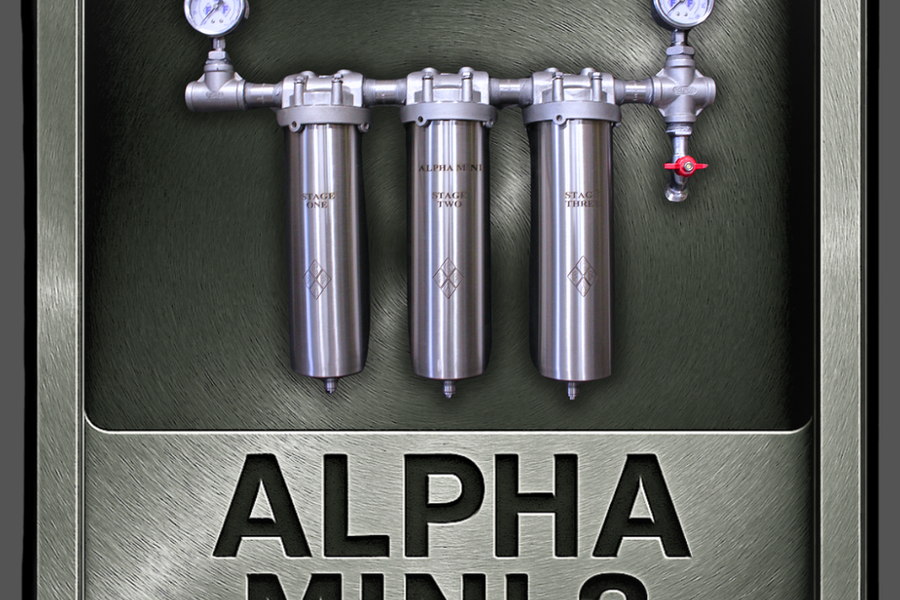
For a system engineered to your specific water conditions and built from surgical-grade stainless steel, Custom Fabricated Filters LLC offers solutions like the ALPHA-MINI-2 for compact spaces or the ALPHA-MINI-3 for slightly larger installations. Both are designed as permanent infrastructure, not disposable components. For more complex requirements, our Surgical Grade Stainless Steel Water Filtration Systems provide the same material quality in configurations built to match your home's specific plumbing and water demands.
Choosing a water filter is a decision about what you want your water system to be in twenty years. A plastic housing will likely be replaced several times in that span; a stainless steel housing will still be doing its job. The benefits come down to material science: non-reactive surfaces, corrosion resistance, and structural integrity that plastic cannot match. When you are ready to stop replacing filters and start investing in infrastructure, Custom Fabricated Filters LLC builds systems designed to deliver clean, high-quality water for a lifetime. Get started by requesting a free water analysis and let the C.L.E.A.R. Water Intelligence System determine the right configuration for your home or business.
Frequently Asked Questions
Are stainless steel water filters better than plastic housings?
For most homeowners, yes. Stainless steel housings offer superior corrosion resistance, withstand higher pressure and temperature, and do not leach chemicals or microplastics into your water. While the upfront cost is higher than plastic, their lifespan is measured in decades, not years, making them a better long-term investment. Plastic housings can also become brittle and crack over time, especially under UV exposure or extreme temperatures.
Does stainless steel leach chemicals into filtered water?
No. Food-grade stainless steel is non-reactive and does not leach chemicals into water. This is a key benefit of stainless steel water filters. Unlike some plastics that can release additives like BPA or phthalates, especially when exposed to heat, high-grade stainless steel is chemically inert. This ensures the water you drink is free from contaminants introduced by the housing material itself.
How long do stainless steel water filter systems typically last?
A well-manufactured stainless steel water filter system is designed to last a lifetime. The housing itself can easily last 20-30 years or more because it resists corrosion, cracking, and pressure fatigue. The only parts you need to replace are the filter cartridges inside, which should be changed according to your water usage and the manufacturer's recommendations, typically every 6-12 months.
Is stainless steel more eco-friendly than plastic water filter components?
Yes. Stainless steel is 100% recyclable, and a durable system reduces the number of plastic housings sent to landfills. Since the housing lasts for decades, you are not repeatedly buying and discarding plastic parts. At its end of life, the stainless steel can be fully recycled and repurposed, significantly reducing the environmental footprint compared to single-use or short-lived plastic filter systems.
ANALYZE MY WATER FOR FREE


Comments