

Best Water Filtration for Sulfur Smell Removal
Table of Contents
Why Sulfur Smell in Water Happens and What It Signals
Well Water Testing for Hydrogen Sulfide Before You Buy
Rule Out the Heater and the Drain First
Which Lab Tests to Request
When to Call a Professional or Public Health Authority
Sulfur Filter for Well Water: How to Choose by Concentration and Chemistry
Whole-House Sulfur Water Filter Options Compared
Quick Comparison: Alpha Series Systems and Cartridge Sets
Sulfur Smell in Water Troubleshooting: When Odor Returns After Installation
Maintenance, Sizing, and Lifecycle Costs for Sulfur Smell Removal
Sizing: Match the System to Peak Demand, Not Average Use
What Drives Maintenance Intervals
Lifecycle Comparison: What to Weigh Beyond Purchase
Conclusion: Matching the Right System to Your Water Test
Frequently Asked Questions
Last Updated: October 15, 2026
Why Sulfur Smell in Water Happens and What It Signals
The best water filtration for sulfur smell removal starts with one honest admission: the odor is a symptom, not the problem.
Hydrogen sulfide is a naturally occurring gas produced when sulfur-bearing organic material breaks down underground.
Sulfur smell has two very different sources, and they need different fixes.
Well-water sulfur enters the home already dissolved in the supply, so the odor shows up at every cold tap
Water-heater sulfur comes from a reaction inside the tank, so the smell appears mainly with hot water
If the odor only shows up in the shower, you may not need a sulfur filter at all.
Watch Out Testing with hot water only is the single most common diagnostic mistake. Always run the cold tap first. If the cold water is clean and the hot water smells, your well is fine and the problem lives in the heater.
Well Water Testing for Hydrogen Sulfide Before You Buy
Well water testing for hydrogen sulfide should happen before you spend a dollar on equipment. A test tells you the sulfur concentration, what else is in the water, and which treatment approach will work, but only if you have confirmed the well is the source.
The CDC's guidance on private well testing recommends testing private wells regularly, since they are not covered by public water system rules. For sulfur, you want a test that captures hydrogen sulfide concentration along with iron, manganese, hardness, and pH.
Rule Out the Heater and the Drain First
Before you pay for a lab test, run a five-minute diagnosis at the tap. It prevents buying a treatment system for a problem that lives in your plumbing.
Cold tap smells, hot tap smells: the sulfur is in the well supply. Proceed to lab testing.
Cold tap clean, hot tap smells: the reaction is happening inside the water heater. A filtration system will not fix it.
Only one fixture smells: the odor is likely in that drain, not the water. A dry P-trap or biofilm in a sink drain can mimic rotten-egg odor.
Homeowners often replace a perfectly good filtration system only to find the smell came from a water heater anode rod or a rarely used guest bathroom drain.
Which Lab Tests to Request
Ask the lab for a package with these parameters:
Hydrogen sulfide (H2S): request a reported concentration, not a pass/fail note. The number drives system sizing.
Iron and manganese: these oxidize alongside sulfur and consume media capacity. High iron changes the treatment train.
pH: acidic water (below roughly 7.0) reduces the efficiency of oxidation stages and can corrode plumbing.
Pro Tip Pull your water sample from a cold tap that has not run for several hours. That gives you the worst-case sulfur reading rather than a diluted one. Follow the lab's chain-of-custody instructions exactly, a mishandled sample produces a number you cannot trust.
When to Call a Professional or Public Health Authority
Sulfur odor is primarily an aesthetic problem, it does not by itself make water unsafe. But testing still matters because sulfur often travels with iron, manganese, and bacteria that do affect water quality. Contact a qualified water treatment professional or your local health department if:
Your lab report shows coliform bacteria or elevated nitrate.
The odor is accompanied by cloudy water, sediment, or a change in taste.
You are on a private well and have never had a full baseline panel run.
A water test tells you which treatment stages you need, and which you can skip.
Sulfur Filter for Well Water: How to Choose by Concentration and Chemistry
A sulfur filter for well water is not a single product category. It is a set of treatment stages matched to your test results.
Here is how we group the options:
Carbon-based filtration: best for low sulfur and taste-and-odor issues, with minimal maintenance
Oxidation plus filtration: best for moderate to high sulfur, where the gas must be converted before it can be trapped
Multi-stage systems: best when sulfur arrives alongside iron, sediment, and scale
Chemistry matters as much as concentration. Oxidation converts dissolved sulfide into a form filtration can capture; skip it and the gas passes straight through a standard cartridge.
This is where custom calibration earns its keep. The C.L.E.A.R.
Sulfur Level | Companion Issues | Recommended Approach |
Low | Taste and odor only | Carbon-based filtration |
Moderate | Some iron, sediment | Oxidation plus filtration |
High | Heavy iron, scale | Multi-stage with iron reduction |
Whole-House Sulfur Water Filter Options Compared
A whole-house sulfur water filter treats water at the point of entry, so every tap, appliance, and fixture gets the same result, the difference between fixing the smell and fixing the problem.
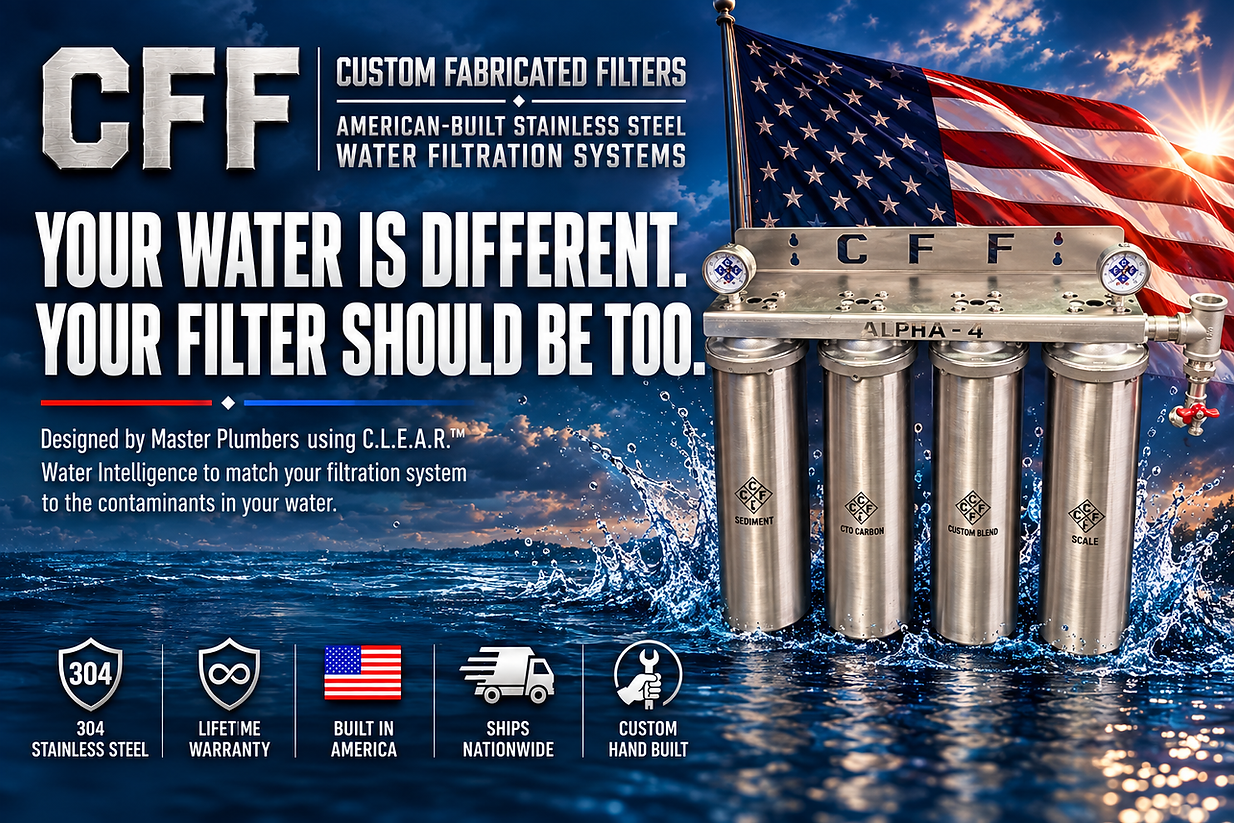
For well-water households, our Alpha series pairs stainless steel housings with cartridge sets calibrated to the water report.
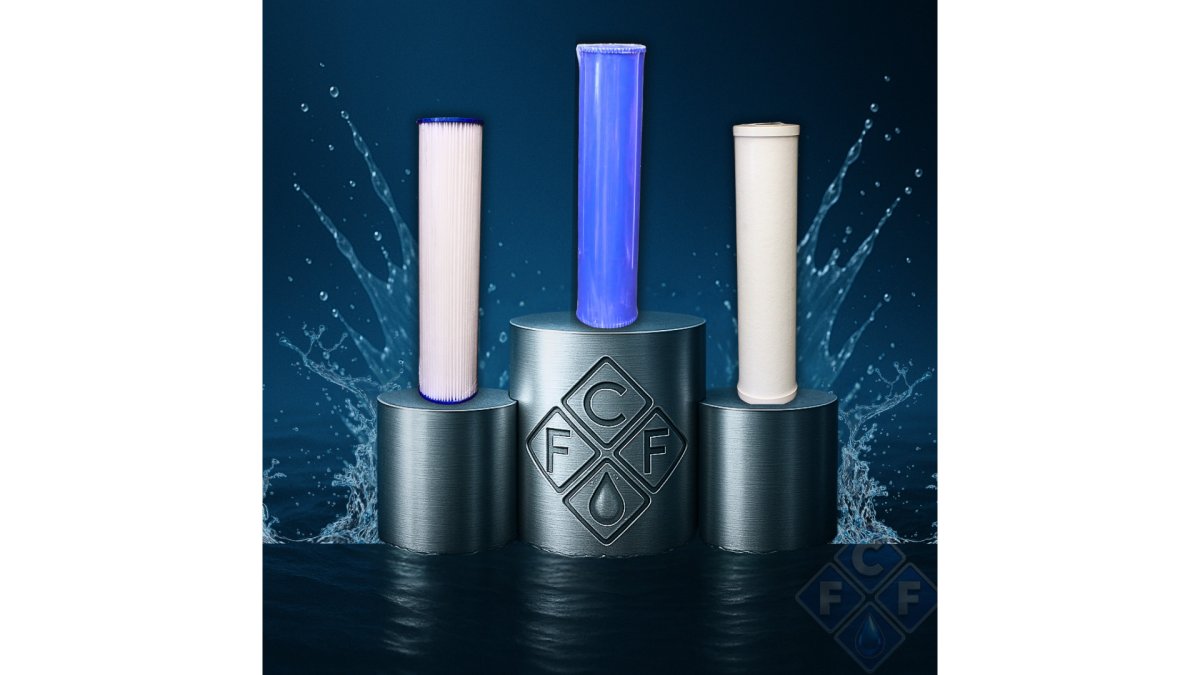
Both sets fit our Alpha series whole-house systems, hand-built from surgical-grade stainless steel rather than plastic. That construction resists cracking and pressure fatigue and avoids the microplastic exposure plastic housings can introduce.
Quick Comparison: Alpha Series Systems and Cartridge Sets
Option | Stages | Best For | Standout Feature |
ALPHA-3 Well Water Cartridge set | Sediment, radial flow blend, iron reduction | Well water with sulfur and iron | Custom calibration to your water report |
ALPHA-4 Well Water Cartridge set | Adds salt-free scale reduction | Well water with sulfur, iron, and scale | Scale reduction without salt |
Alpha-3 Water Filtration System | Three-stage whole house | Standard well-water homes | Stainless steel construction |
Alpha-4 Water Filtration System | Four-stage whole house | Homes with scale concerns | Designed for 1-5 bathroom homes |
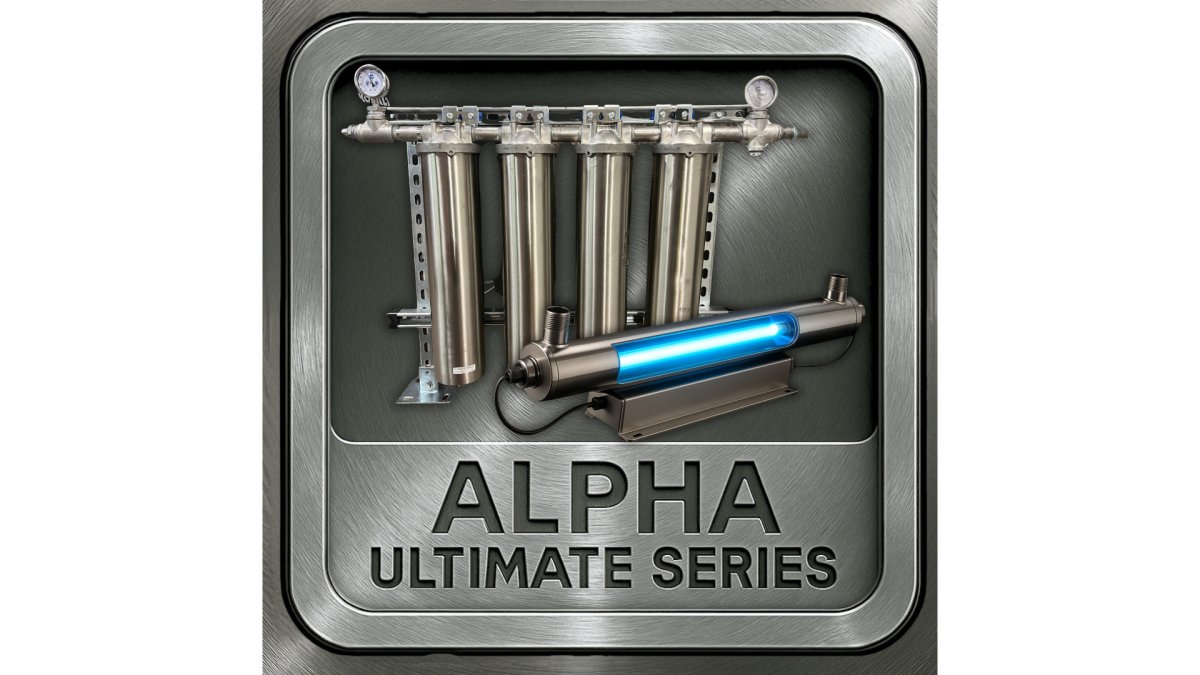
Alpha Ultimate Water Filtration System | Four stages plus stainless steel UV | Households wanting pathogen treatment | UV light for microscopic bacteria |
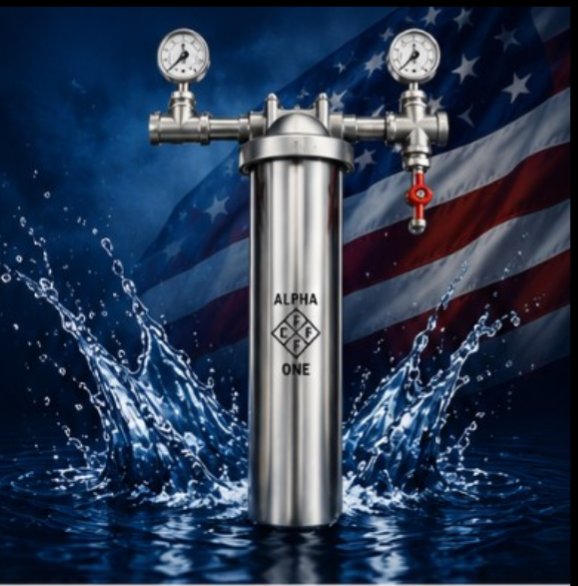
ALPHA-ONE Combo | Whole house plus point-of-use | Drinking water and ice makers | Bundled whole-house and mini system |
Sizing is the other half of the decision. A system rated for one to five bathrooms handles most single-family homes, but a guest house or heavy simultaneous demand needs more capacity. Our systems are upgradeable, so you can add stages as your water or household changes.
Best For Well-water households dealing with sulfur plus iron, where a plastic cartridge housing would fail under pressure and demand a replacement cycle every few months.
Sulfur Smell in Water Troubleshooting: When Odor Returns After Installation
Sulfur smell in water troubleshooting usually comes down to one of three causes, none of which mean the system failed.
First, check the water heater: if the odor returned only on hot water, the heater is the source, not the well.
Odor at cold taps only: filtration stage issue
Odor at hot taps only: water heater issue
Odor everywhere after months of clean water: media exhaustion or a shift in water chemistry
If the smell returns across the whole house, retest before replacing anything. A changed sulfur or iron reading usually explains it, and the fix is a recalibrated cartridge set, not a new system.
Maintenance, Sizing, and Lifecycle Costs for Sulfur Smell Removal
Maintenance for sulfur smell removal is mostly about cartridge replacement intervals and what drives them. Sulfur load, iron load, and household water use all shorten media life, so a fixed schedule rarely fits every home. A household with 2 ppm hydrogen sulfide and 1 ppm iron exhausts media far faster than one with trace sulfur and no iron.
Sizing: Match the System to Peak Demand, Not Average Use
Undersizing is the most common reason a sulfur system underperforms: when flow rate exceeds what the media bed can treat, contact time drops, oxidation does not complete, and sulfur passes through.
Size on these four numbers:
Peak flow rate: add up simultaneous demand, showers, laundry, dishwasher, irrigation. A typical shower draws roughly 2 to 2.5 gallons per minute; two showers plus laundry can push a home past 8 GPM.
Household size: more occupants means more concurrent demand and faster media exhaustion.
Well yield: if the pump cannot deliver the system's rated flow, the system cannot perform to spec regardless of its rating.
As a rule of thumb, a system rated for one to five bathrooms handles most single-family homes; a guest house, large family, or heavy irrigation needs more capacity. Full-port plumbing supports higher flow without the pressure drop that chokes a household during simultaneous use.
What Drives Maintenance Intervals
Sulfur concentration: higher H2S loads consume media faster. A system sized for low sulfur will need more frequent service if the reading climbs.
Iron and manganese: these oxidize and deposit on media, reducing capacity between replacements.
Sediment: a pre-filter stage protects downstream media from dirt and extends its life.
Track your replacement dates. If intervals shrink, retest the water, a rising sulfur or iron number usually explains it, and the fix is a recalibrated cartridge set, not a new system.
Lifecycle Comparison: What to Weigh Beyond Purchase
When comparing options, look past the sticker price. The real cost of ownership includes:
Replacement media and cartridges: the recurring expense, driven by your water chemistry and household size.
Electricity: oxidation stages and UV treatment draw power continuously.
Service labor: if you hire out annual maintenance, factor it in.
The lifecycle math favors durable construction if you plan to stay in the home. A system that survives a decade of pressure cycling and accepts new stages as your water changes costs less over time than one replaced every few years.
On cost, we will be direct: pricing depends on your water report, the number of stages, and the size of the system. Request a quote and we will price the configuration your test results call for.
Key Takeaway Size on peak flow and contact time, not average use. Track replacement intervals, shrinking intervals mean your water changed, not that the system failed. And compare lifecycle cost, not just purchase price.
Conclusion: Matching the Right System to Your Water Test
The sulfur smell in your water is solvable, but only if you start with the test rather than the product page.
At Custom Fabricated Filters LLC, we build Custom Built Water Filtration Systems from 100% surgical-grade stainless steel, hand-built by master plumbers and calibrated through the C.L.E.A.R.
Get started with Custom Fabricated Filters LLC and match your system to your water test.
Frequently Asked Questions
What is the best water filter for sulfur smell?
The right system depends on your water test results. For well water with hydrogen sulfide, a whole-house system with sediment filtration, a radial flow blend, and iron reduction handles both the odor and the iron that often accompanies it. Custom-calibrated cartridge sets, like the ALPHA-3 or ALPHA-4 Well Water sets, are matched to your specific water chemistry. Always test first, because the treatment that works for one well may not work for another.
How do you remove a rotten-egg smell from well water?
Start by testing for hydrogen sulfide, iron, and sediment. Then choose a treatment approach based on the concentration: sediment filtration catches particles, a radial flow blend targets dissolved contaminants, and iron reduction media handles the iron that often drives the odor. For persistent sulfur smell, a custom-calibrated whole-house system sized to your household flow rate removes the odor at the point of entry so every tap is covered.
Will a whole-house water filter remove sulfur odor?
A whole-house sulfur water filter can reduce sulfur odor when the cartridge media is matched to your water test results. Systems with sediment, radial flow blend, and iron reduction stages address the contaminants that cause rotten-egg odor. If odor remains after installation, the cause may be the water heater rather than the supply, so troubleshooting should include both the well and the hot water tank before assuming the filter failed.
Should well water be tested before choosing a sulfur filter?
Yes. Well water testing for hydrogen sulfide tells you the concentration and reveals co-contaminants like iron, manganese, and sediment that affect media selection. Two wells with the same sulfur smell can need different cartridge blends. A test also gives you a baseline to compare against after installation, so you can confirm the sulfur smell removal is actually working rather than guessing from the nose alone.
Why does sulfur smell remain after installing a water filtration system?
Sulfur smell in water troubleshooting usually points to one of three causes: the cartridge media was not matched to your water chemistry, the system is undersized for your household flow rate, or the odor source is the water heater rather than the well. Check whether the smell appears in cold water, hot water, or both. If only hot water smells, the anode rod in the heater is the likely culprit, not the filter.
ALPHA-3 Well Water Cartridge set
Comments