

How to Choose a Micron Rating for Well Water
Last Updated: October 22, 2026
Quick Summary
How to choose a micron rating for well water starts with a certified water test that reveals your sediment's particle size and load. Match coarser ratings like 20 microns for high-sediment wells and finer ratings like 5 microns for clarity, then combine stages for better results.
A water test showing turbidity above 5 NTU requires sediment filtration before other treatment
20-micron filters handle high sediment volume with minimal pressure drop and longer cartridge life
5-micron filters capture fine silt and clay for crystal-clear water but need more frequent replacement
Pleated cartridges outperform spun cartridges at the same micron rating due to greater surface area
Multi-stage filtration using 20 microns first then 5 microns removes 95+ percent of visible sediment
Table of Contents
Understanding Micron Ratings for Well Water
What a Micron Rating Means
Why Micron Size Matters for Well Water
Absolute vs Nominal Micron Rating: Which One Matters
How to Test Well Water for Sediment
Reading Your Water Test Results
Interpreting Turbidity and Particle Size Data
5 Micron vs 20 Micron Water Filter: Which Rating for Your Well
20 Micron Filters for High-Sediment Wells
5 Micron Filters for Finer Particle Removal
Comparing Common Micron Ratings: 1, 5, 10, and 20
Well Water Filter Flow Rate and Pressure Drop
Matching Filter Micron Rating to Your Household Demand
Understanding Pressure Drop and Filter Lifespan
Multi-Stage Filtration for Mixed Sediment
Selecting the Right Filter Media and Cartridge
Pleated Sediment Cartridges for Well Water
Custom Calibration for Your Specific Water Conditions
Maintenance and Replacement: How Often to Change Your Sediment Filter
Frequently Asked Questions
Understanding Micron Ratings for Well Water
What a Micron Rating Means
A micron rating tells you the smallest particle size a water filter can capture. One micron equals one-millionth of a meter.
The smaller the micron number, the finer the filtration. A 1-micron filter catches tinier particles than a 20-micron filter.
Well water often contains visible sediment. Sand, silt, and rust particles are common. Choosing the right micron rating means balancing particle removal against flow rate and filter lifespan.
Pro Tip The micron rating printed on a filter cartridge tells you what the manufacturer designed it to catch, but real-world performance depends on filter media type, water pressure, and flow rate. A 5-micron pleated cartridge outperforms a 5-micron spun cartridge because pleated media has more surface area.
Why Micron Size Matters for Well Water
Understanding how to choose a micron rating for well water starts with recognizing that well water is unpredictable.
Sediment damages fixtures and clogs downstream filters. It makes water cloudy and can affect taste. More importantly, sediment shortens the lifespan of any filtration system by clogging later stages faster.
The right micron rating catches sediment before it reaches your whole house. This protects appliances, extends the life of other filters, and keeps your water clear.
Absolute vs Nominal Micron Rating: Which One Matters
This distinction changes how you interpret filter performance. A nominal micron rating means the filter catches most particles at that size, typically 85-90 percent.
An absolute micron rating means the filter will not allow any particle larger than that size to pass through.
Most sediment filters sold for residential well water use nominal ratings. They're less expensive and adequate for removing visible sediment.
Watch Out Do not confuse micron rating with filter "grade." A filter labeled "micron" without a number is marketing speak, not a specification. Always look for the actual number, 1, 5, 10, or 20 microns, to know what you're getting.
How to Test Well Water for Sediment
Testing your water is the foundation of learning how to choose a micron rating for well water. You cannot pick an effective filter without knowing what particles you're trying to remove.
Fresh Water Systems
Reading Your Water Test Results
A certified water test gives you exact data about sediment, turbidity, and particle size. Many state health departments maintain lists of certified labs.
Request a test that includes:
Turbidity (cloudiness measurement)
Sediment particle size analysis
Iron content
Hardness
pH level
The lab report will show turbidity in NTU (Nephelometric Turbidity Units). Water below 0.5 NTU appears clear. Above 1 NTU, cloudiness becomes visible.
Particle size data tells you the dominant sediment type. Sand particles typically range from 50 to 200 microns. Silt runs 2 to 50 microns.
Interpreting Turbidity and Particle Size Data
High turbidity means high sediment load. A well producing 10+ NTU needs aggressive pre-filtration.
Low turbidity (under 1 NTU) suggests minimal sediment. A single 5-micron or 10-micron stage may be sufficient.
Particle size distribution matters more than average size. If your lab report shows 80 percent of particles are 20 microns or larger, a 20-micron filter removes most sediment.
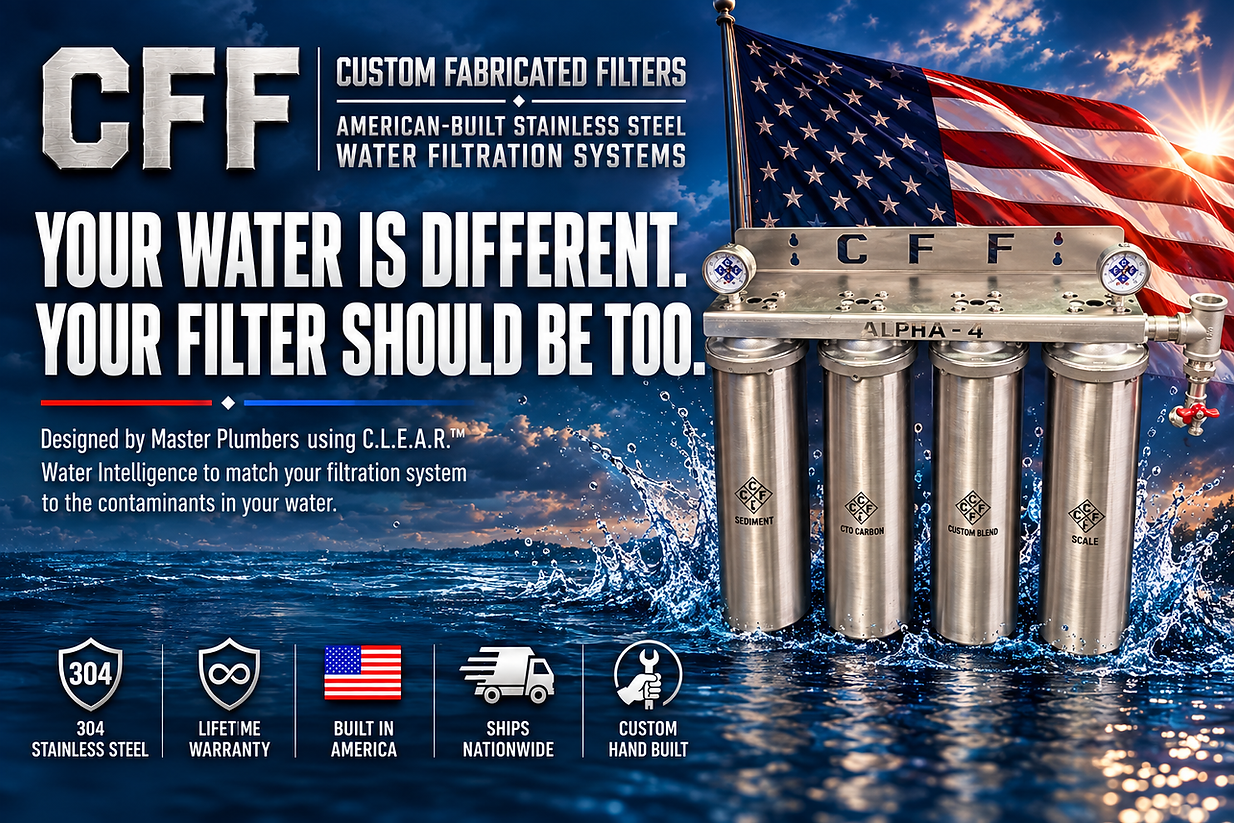
Compare your test results to filter specifications. The Custom Built Water Filtration Systems from Custom Fabricated Filters LLC are calibrated using the C.L.E.A.R.™ Water Intelligence System based on water test data.
Key Takeaway Your water test report is your roadmap. It tells you the sediment size, volume, and type, the three factors that determine which micron rating will work and how often you'll replace cartridges. Without this data, you're guessing.
5 Micron vs 20 Micron Water Filter: Which Rating for Your Well
This is the most common decision point. Both ratings work for well water, but they serve different purposes.
20 Micron Filters for High-Sediment Wells
A 20-micron filter is coarser. It catches larger particles: sand, visible sediment, and rust flakes. Water flows faster through a 20-micron cartridge, so pressure drop is minimal.
Use 20-micron filtration if:
Your well produces visible sediment or cloudiness
Turbidity testing shows 3+ NTU
Particle analysis shows most sediment is 20 microns or larger
You need high flow rate for large households or irrigation
You want longer time between filter changes
The trade-off: A 20-micron filter alone will not achieve crystal-clear water if fine sediment is present. Silt and clay particles pass through.
5 Micron Filters for Finer Particle Removal
A 5-micron filter captures smaller particles: fine silt, clay, and some rust colloids. Water flows slower, and pressure drop increases slightly. Cartridges need replacement more often.
Use 5-micron filtration if:
Water test shows significant silt or clay content
Turbidity is 1-3 NTU but cloudiness is visible
You want polished, crystal-clear water
You're willing to replace cartridges more frequently
Downstream equipment (ice makers, whole-house filters) needs extra protection
Comparing Common Micron Ratings: 1, 5, 10, and 20
Micron Rating | Best For | Flow Rate Impact | Cartridge Life | Sediment Capture |
20 | High sediment, fast flow | Minimal | Longest | Large particles (sand, rust) |
10 | Moderate sediment mix | Low | Medium | Medium to large particles |
5 | Fine sediment, clarity | Moderate | Shorter | Fine silt and clay |
1 | Maximum clarity, sensitive equipment | High | Very short | Nearly all particles |
Most well-water applications use 20 or 5 microns as the primary sediment stage. A 1-micron filter is overkill for general sediment removal and clogs too quickly. Use 1-micron cartridges only in specialized applications where ultra-fine filtration is required downstream.
For wells with mixed sediment, combine stages: start with 20 microns to handle volume, then add 5 microns for polishing. This staged approach extends cartridge life and maintains better flow than using 5 microns alone.
Well Water Filter Flow Rate and Pressure Drop
Your household water demand determines the filter size you need. Undersized filters create slow flow and high pressure drop. Oversized filters are unnecessary and waste space.
Matching Filter Micron Rating to Your Household Demand
Flow rate is measured in gallons per minute (GPM). Peak household demand typically occurs during morning showers or when running multiple fixtures.
Calculate your peak demand:
Shower: 2.5 GPM
Bathroom sink: 1 GPM
Kitchen sink: 2 GPM
Toilet: 3 GPM
If two showers run simultaneously while someone fills a bath, peak demand might be 8-10 GPM. Size your filter to handle this without excessive pressure drop.
Coarser filters (20 microns) handle higher flow rates. Finer filters (5 microns) reduce flow. A 20-micron cartridge might pass 20 GPM with minimal pressure drop.
Pro Tip Do not confuse filter size with micron rating. A large 20-micron cartridge flows faster than a small 5-micron one. For high-flow applications, choose larger cartridge dimensions in finer micron ratings rather than accepting lower performance from smaller cartridges.
Understanding Pressure Drop and Filter Lifespan
Pressure drop is the reduction in water pressure caused by the filter. As sediment accumulates, pressure drop increases.
Finer filters accumulate sediment faster, so pressure drop rises sooner. A 5-micron filter in high-sediment water might clog in 3 months.
Monitor your water pressure gauge. If pressure drops suddenly, the cartridge is nearing the end of its life.
Surgical Grade Stainless Steel Water Filtration Systems from Custom Fabricated Filters LLC withstand pressure fluctuations without cracking or degradation.
Multi-Stage Filtration for Mixed Sediment
Wells often contain multiple sediment types. Sand, silt, clay, and rust particles coexist. A single-stage filter cannot efficiently handle this mix.
Multi-stage filtration solves this problem. The first stage (coarser) removes large particles and extends cartridge life.
A typical two-stage design uses 20 microns first, then 5 microns. This combination removes 95+ percent of visible sediment while maintaining acceptable flow and reasonable cartridge life.
For wells with very high sediment load, add a third stage.
Progressive filtration means each stage works smarter:
Stage 1 handles volume and protects downstream cartridges
Stage 2 catches finer particles the first stage missed
Later stages target specific contaminants (iron reduction, scale prevention)
This approach extends total cartridge life and improves water quality more than any single stage alone.
Selecting the Right Filter Media and Cartridge
Not all micron-rated cartridges perform equally. Filter media type matters as much as the micron rating.
Pleated Sediment Cartridges for Well Water
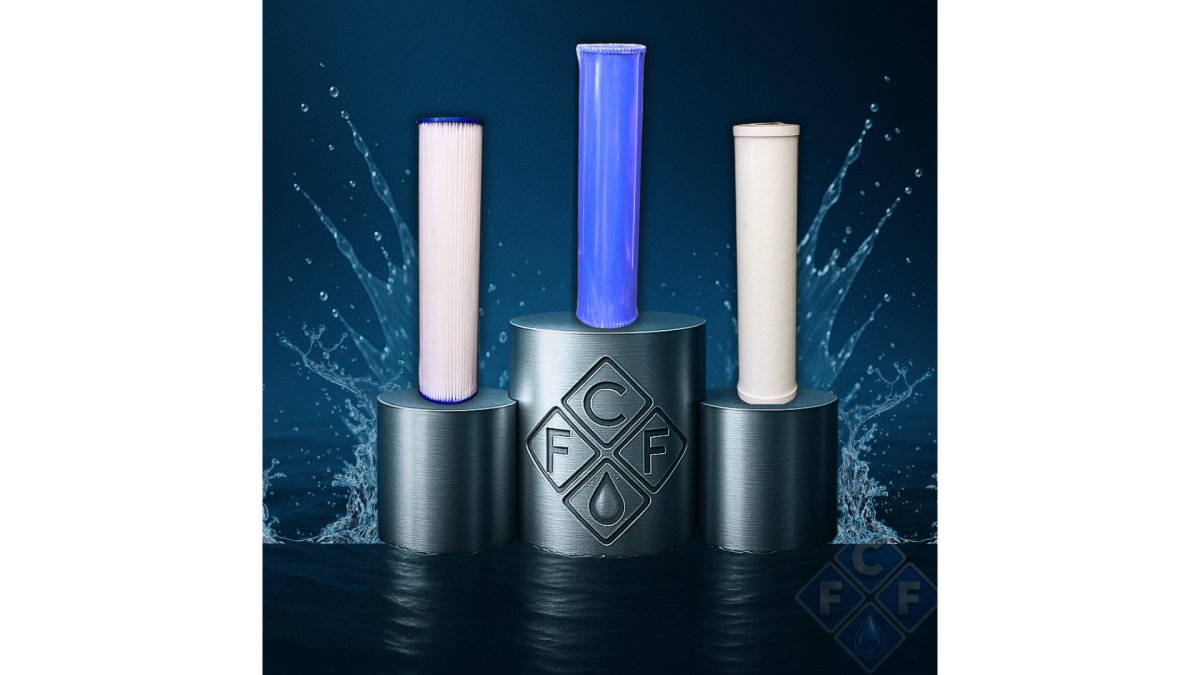
Pleated cartridges have more surface area than spun cartridges. More surface area means longer life and better flow.
Pleated media also provides better particle capture at the rated micron size. The pleats create multiple filtration layers, improving efficiency.
The Alpha Sediment Cartridge is a 20-micron pleated design that removes dirt, sand, silt, and clay.
For well water, always choose pleated over spun. The modest cost difference is worth the performance gain.
Custom Calibration for Your Specific Water Conditions
Generic cartridges work, but custom-calibrated cartridges work better. They're selected specifically for your well's sediment profile.
Custom Fabricated Filters LLC uses the C.L.E.A.R.™ Water Intelligence System to analyze your water test results and recommend the exact cartridge combination your well needs.
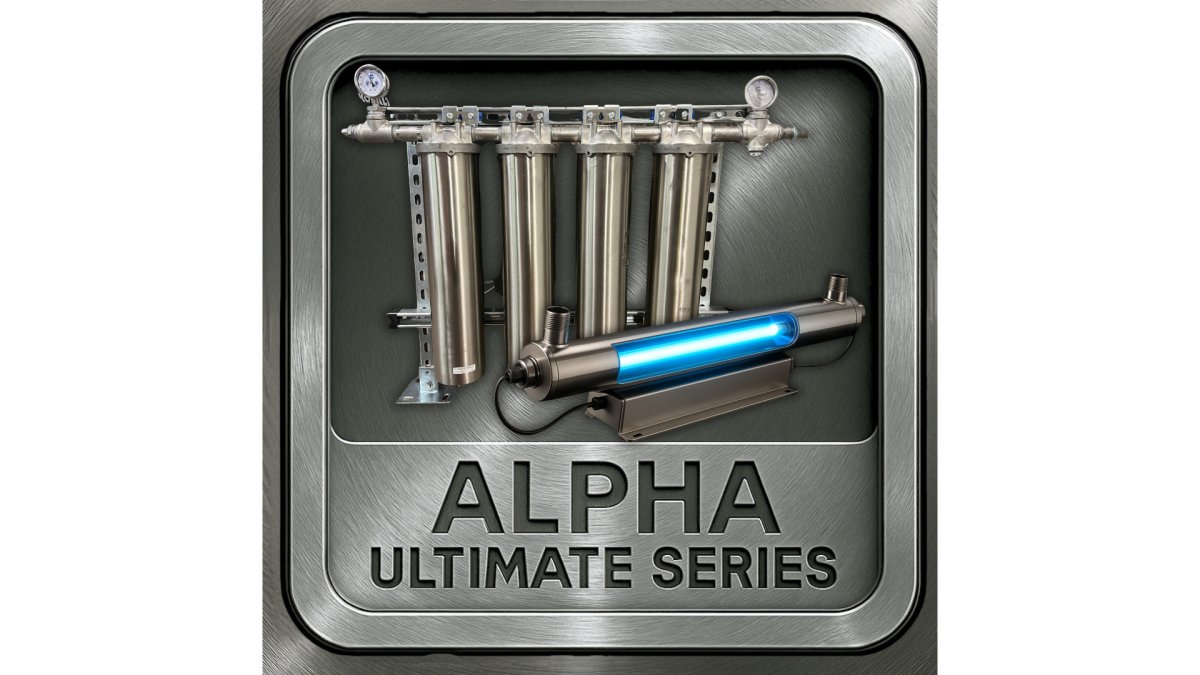
The ALPHA-3 Well Water Cartridge Set and ALPHA-4 Well Water Cartridge Set are both hand-picked by water filtration experts for well-water applications. They're not one-size-fits-all; they're matched to your specific conditions.
This approach eliminates guesswork. You get a system designed for your well, not a generic solution hoping to fit.
Maintenance and Replacement: How Often to Change Your Sediment Filter
Cartridge lifespan depends on sediment load, flow rate, and micron rating.
Monitor these signs:
Slow flow: Water pressure drops noticeably
Cloudiness returns: Water clarity declines despite filtration
Pressure gauge reading: When pressure drop exceeds baseline by 15-20 PSI
Calendar time: If 6-12 months pass, replace it regardless
Most well-water sediment filters need replacement every 3-12 months. High-sediment wells might need quarterly changes.
Keep spare cartridges on hand. Replacement takes 15 minutes and requires no special tools.
Document your replacement schedule.
Key Takeaway Sediment filtration is not a "set and forget" system. Regular monitoring and timely cartridge replacement keep your water clear and protect your whole-house infrastructure. Neglecting maintenance defeats the purpose of filtration.
Choosing the right micron rating for well water starts with understanding your specific sediment.
Multi-stage filtration delivers better results than any single stage alone.
Frequently Asked Questions
What does a micron rating on a water filter actually mean?
A micron rating measures the smallest particle size a filter can capture. One micron equals one millionth of a meter. A 20-micron filter removes particles 20 microns or larger, while a 5-micron filter captures finer particles. For well water with sand, silt, and sediment, understanding micron size helps you select the right filter to remove contaminants without restricting water flow too much.
Should I test my well water before choosing a sediment filter micron rating?
Yes. A certified water test reveals the exact particle sizes, turbidity levels, and sediment concentration in your well. This data lets you match your filter micron rating to actual contaminants rather than guessing. Test results show whether you need coarse 20-micron filtration, finer 5-micron removal, or multi-stage filtration for mixed sediment sizes like sand, rust, and clay.
What's the difference between absolute and nominal micron ratings?
A nominal micron rating estimates average particle capture, while an absolute micron rating guarantees removal of 99.9% of particles at that size. Absolute ratings are more reliable for critical applications. When choosing a filter for well water, absolute ratings provide certainty that your sediment filter will remove the specified particle size consistently, especially important for protecting downstream appliances and ensuring water quality.
How does micron rating affect water pressure and filter lifespan?
Finer micron ratings (like 5 microns) capture more particles but create higher pressure drop, reducing flow rate and shortening filter life. Coarser ratings (20 microns) allow faster flow but remove less sediment. For well water, match your micron rating to peak household demand and sediment load. A staged filtration design using 20-micron pre-filters followed by finer stages balances particle removal, flow performance, and cartridge lifespan.
Alpha Sediment Cartridge
Add cffilters.com as a preferred source on Google →

Comments