

Is Water Quality Intelligence Worth It for Small Businesses?
Last Updated: October 24, 2026
Quick Summary
Water quality intelligence is worth it for small businesses because it replaces guesswork with a testing routine, a few targeted sensors, and filtration sized to your results. It lets you change cartridges on data instead of hunches and catch contamination while it is still cheap to fix.
Start with a baseline lab panel covering microbiological, physical, chemical, and site-specific parameters.
Sensors pay off first on turbidity, pressure differential, and conductivity or TDS.
A one-page plan should name what you test, how often, who does it, and what triggers action.
A reasonable default is annual full-panel testing, quarterly key-parameter checks, and monthly spot checks.
Run the payback test before buying hardware, and test your water before sizing any system.
Table of Contents
What Water Quality Intelligence Means for a Small Business
Commercial Water Testing: What to Test and Why
Water Quality Sensors for Businesses: Real-Time Monitoring Without the Enterprise Price Tag
Building a Water Quality Management Plan for a Small Operation
What this looks like in practice
Water Testing Frequency for Businesses: How Often Is Enough?
The Cost-Benefit Case: Proactive Monitoring vs. Reactive Repairs
Choosing Filtration Hardware That Fits Your Monitoring Data
Get Your Water Analyzed Before You Buy Anything
Frequently Asked Questions
What Water Quality Intelligence Means for a Small Business
Water quality intelligence is the practice of collecting ongoing data about your water, interpreting it, and using it to make filtration and maintenance decisions before problems reach your taps.
For a small business, that does not mean a control room full of screens.
The payoff is straightforward. You stop replacing cartridges on a hunch, you catch a contamination event while it is still cheap to fix, and you can show a paper trail if anyone asks how you manage water safety.
Commercial Water Testing: What to Test and Why
Commercial water testing is laboratory or field analysis of your water supply for specific contaminants, and it is the foundation every other decision rests on.
A useful baseline panel covers a handful of categories:
Microbiological: total coliform and E. coli, the standard indicators of bacterial contamination.
Physical: turbidity, sediment load, and color, which tell you how hard your filters will work.
Chemical: chlorine or disinfectant residual, iron, manganese, hardness, nitrates, and pH.
For businesses on well water, add a broader mineral panel and test more often.
What most guides miss is that a single test is a photograph, not a film. Water quality trends matter more than any one result.
Water Quality Sensors for Businesses: Real-Time Monitoring Without the Enterprise Price Tag
Water quality sensors for businesses do not have to mean a full industrial IoT deployment.
Where sensors pay off first:
Turbidity, because a sudden jump signals a disturbance upstream or a filter nearing the end of its life.
Pressure differential across a filter housing, which tells you when a cartridge is loading up without anyone opening the housing.
Conductivity or TDS, useful for spotting a shift in source water quality.
Inline sensors that log to a phone or a simple dashboard are now within reach for a small operation. You can also compare high-pressure water filtration systems for small businesses that pair well with monitoring data.
Building a Water Quality Management Plan for a Small Operation
A water quality management plan is a written document that states what you test, how often, who does it, what result triggers action, and where the records live.
Here is the structure we recommend to non-technical owners, with the practical detail that makes it stick:
Inventory your water sources. Note every point of entry and every point of use that matters, from the kitchen tap to the process line. Walk the building with a clipboard and number each one. Most small businesses find two or three points they had never thought about, an outdoor hose bib feeding a sprayer, a mop sink, an ice machine.
Set your baseline. Run a full panel once, at each entry point, before you change any equipment. Use a certified laboratory for the first panel; field kits are fine for ongoing checks but not for the baseline you will compare against for years.
Define your parameters and limits. Write down the acceptable range for each one and what happens when a reading falls outside it. Keep the action simple: a turbidity spike above your normal range means check the filter; a pressure differential above your threshold means schedule a change. You do not need a corrective-action form, a sentence on the plan is enough.
Assign responsibility. Name the person who takes samples and the person who reviews results. In a small business these may be the same person, and that is fine. What matters is that the name is written down, so the routine survives a busy week.
Set a sampling calendar. Put test dates on the same calendar as filter changes and inspections. Pair them deliberately: take your turbidity reading the same morning you check the filter housing, so the two data points tell one story.
Keep records in one place. A binder or a shared folder both work. The point is that a new employee can find last year's results in under a minute. A simple spreadsheet with columns for date, parameter, result, and action taken is enough for most operations.
The maintenance side of the plan matters as much as the testing side. Our commercial water filtration system maintenance guide covers inspection steps and filter replacement schedules you can build into your plan.
What this looks like in practice
The plan changes by industry, and that is the part generic guides miss:
Craft breweries and small food processing. Water chemistry affects product consistency directly. A plan that tracks hardness, pH, and chlorine at the brew-house entry point, and logs them against batch outcomes, turns water data into a quality-control tool, not just a compliance chore.
Boutique hospitality. Guest complaints about taste, odor, or spotting on glassware are early signals. A plan that pairs a quarterly lab panel with monthly turbidity and pressure checks catches the problem before reviews do.
Small-scale manufacturing. Process water that feeds a rinse or cooling loop needs a plan tied to equipment warranty requirements. Check what your equipment vendor requires in writing and build the sampling calendar around it.
Key Takeaway The first week of a new plan should produce three things: a numbered list of water points, one baseline lab report, and a one-page document with names and dates on it. Everything else can be added later.
Water Testing Frequency for Businesses: How Often Is Enough?
Water testing frequency for businesses depends on your source and your risk, not on a single industry rule.
Adjust upward when:
You are on a private well, where source conditions change with weather and season.
Your water feeds a process where a contaminant would spoil product or trigger a complaint.
You have had a positive result in the past year.
Adjust downward only after a year or two of stable results.
Watch out: the most common mistake is testing only after something goes wrong.
The article sets out a default testing cadence and the signals that should push it higher or lower.
Situation | Testing frequency | Note |
Stable public supply | Annual full panel | Reasonable default |
Key parameters | Quarterly checks | Part of the default routine |
Anything known to fluctuate | Monthly spot checks | Part of the default routine |
Private well | Test more often | Source changes with weather and season |
Positive result in past year | Adjust upward | Also for older plumbing or vacant buildings |
Year or two of stable results | Adjust downward | Keep at least an annual full panel |
The Cost-Benefit Case: Proactive Monitoring vs. Reactive Repairs
Proactive monitoring costs a predictable amount every month.
Start with the three cost buckets that matter at small-business scale:
Testing and monitoring. A baseline laboratory panel typically runs a few hundred dollars; a set of inline sensors for turbidity, pressure differential, and conductivity can be had for a few hundred to a low four-figure sum depending on logging and connectivity. Ongoing consumables, test strips, calibration solution, replacement sensor heads, are the recurring line item most owners forget.
Scheduled maintenance. Cartridge and media changes on a calendar are a known, budgetable expense. The cost per change is fixed; the only variable is how often your data says you need it.
Failure costs. Emergency plumbing, lost product, unscheduled staff time, and expedited shipping on replacement parts. These are the numbers that blow up a month.
The comparison is not really about which is cheaper on paper. It is about which failure you can absorb. A scheduled cartridge change is a line item.
A simple payback test works for most small operations:
Estimate your reactive baseline. Add up last year's emergency repairs, expedited parts, and any product or revenue you lost to water problems. Most owners underestimate this because the costs are scattered across invoices.
Price a proactive routine. Add baseline testing, the one or two sensors that fit your site, and scheduled maintenance for a year.
Compare the two against downtime. If a single day of disrupted operations costs more than a year of monitoring, the case is already made.
Guidance from the CDC on drinking water safety makes the same point from a public health angle: consistent monitoring and treatment are what prevent contamination events, not fast reactions after the fact.
We see this pattern with owners who move from disposable under-sink cartridges to permanent stainless steel infrastructure. The C.L.E.A.R.™ Water Intelligence System is how we structure that reporting, so decisions rest on readings rather than guesses.
Pro Tip Run the payback test before you buy hardware. If you cannot name last year's reactive costs, spend one month logging every water-related expense, parts, labor, downtime, and you will have the number you need.
Choosing Filtration Hardware That Fits Your Monitoring Data
Filtration hardware should be selected to match the contaminants your testing actually found, at the flow rate your operation actually draws. Buy the system your data justifies, not the one with the longest feature list.
Work through it in this order:
Match the stage to the contaminant. Sediment ahead of everything, carbon for taste, odor and chlorine, and additional stages only for what your panel identified.
Size for peak flow. A system rated below your peak demand will pass water too fast to treat it properly.
Confirm the micron rating. Our guide to choosing a micron rating for well water walks through how tight a filter should be without choking your pressure.
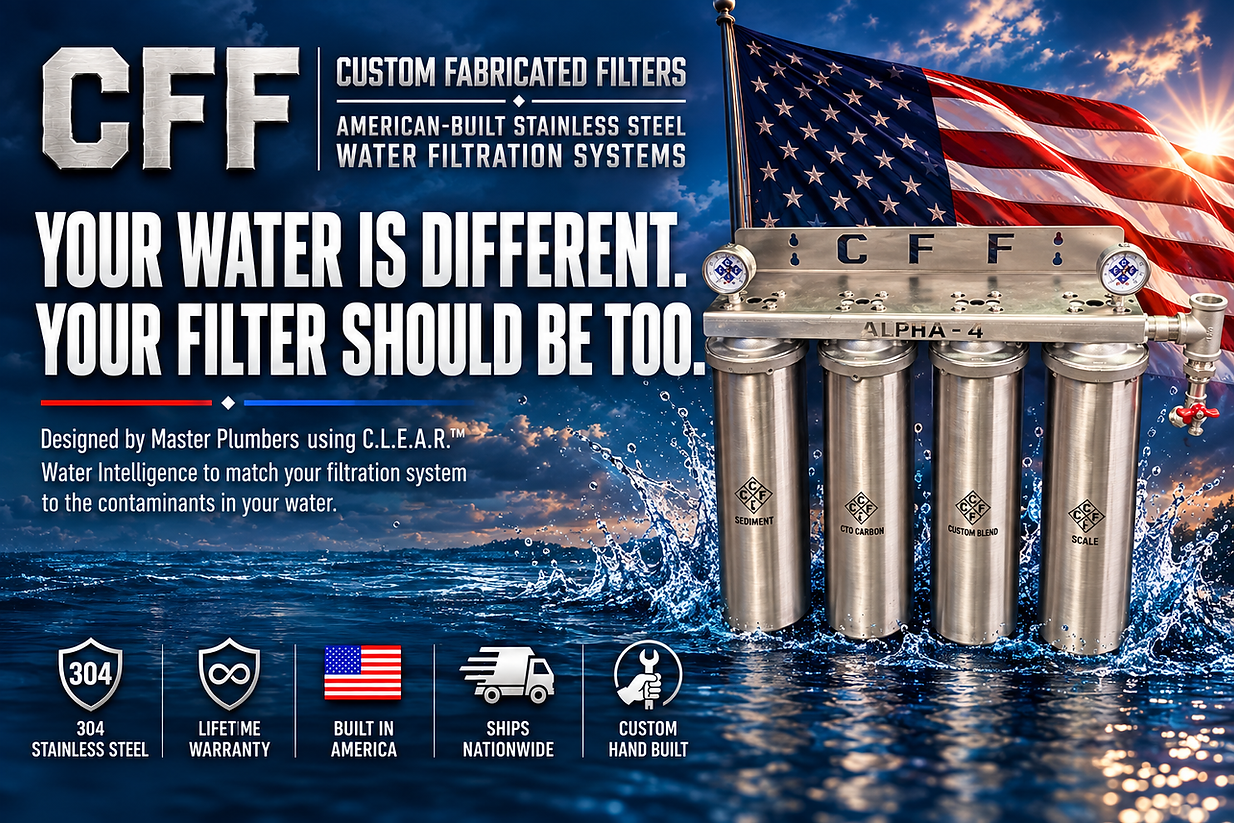
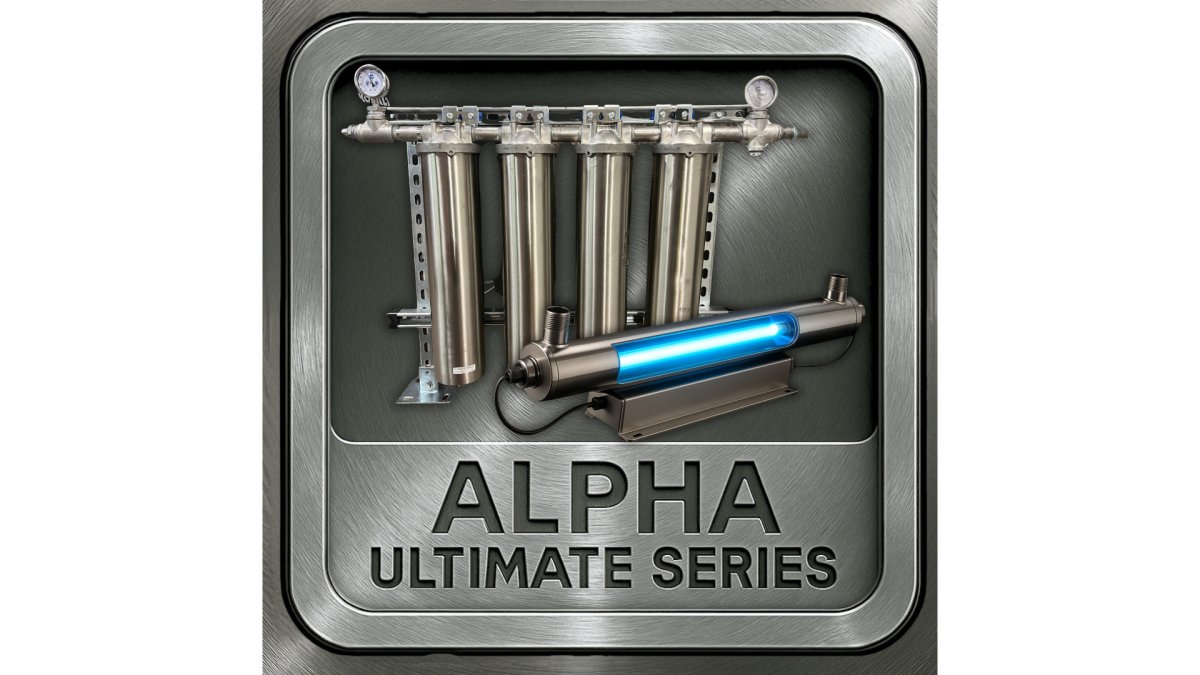
For most small operations, the Alpha-3 Water Filtration System handles three stages of city water treatment, while the Alpha-4 Water Filtration System adds a water softening stage for buildings with one to five bathrooms. The ALPHA Ultimate Water Filtration System pairs four stages with an all Stainless Steel U.V. light for removing microscopic bacteria and pathogens from your water. Every one of them is custom hand-built from surgical-grade stainless steel and calibrated through the C.L.E.A.R.™ Water Intelligence System, so the cartridge blend matches the water you actually have.
Best for: owners who want permanent infrastructure instead of disposable cartridges. Skip if: you need a point-of-use filter for a single sink, where the ALPHA-Mini-3 is the better fit.
Get Your Water Analyzed Before You Buy Anything
The order matters more than the equipment. Test first, then size the system to the result.
If you are not sure where to start, we can help you get a documented baseline for contaminants, water quality, and the right filtration approach for your building.
Water quality intelligence only works if it leads to action, and action starts with knowing what is in your water.
Frequently Asked Questions
What does water quality intelligence mean for a small business?
It means knowing what is in your water and how it changes over time, then acting on that data before problems reach your equipment or customers. In practice, water quality intelligence combines periodic lab testing, in-line monitoring where it makes sense, and a written response plan. For a small business, the goal is not a control room full of screens. It is a simple system that flags contamination detection early, tracks water quality trends across seasons, and tells you when to service filtration stages.
How often should a small business test its water?
Water testing frequency for businesses depends on the source and the risk. A municipal-supplied office might test quarterly for core parameters and annually for a broader panel. A food and beverage facility or anyone on a private well should test more often, and always after any change in taste, color, or pressure. Test immediately after plumbing work, after flooding, and whenever a sensor reading drifts from its baseline. Keep every result so you can spot water quality trends rather than reacting to single readings.
Which water quality indicators should a business track?
Start with the parameters that affect your specific operation: sediment and turbidity, chlorine or disinfectant residual, pH, hardness, iron, and conductivity. Food and beverage operations usually add microbiological testing on a set schedule. Track these as water purity metrics over time instead of one-off snapshots. The pattern matters more than any single number, because a slow drift in pH or hardness is often the first sign that filtration stages are exhausting or that something changed upstream.
Can water quality monitoring help prevent equipment issues?
Yes. Scale, sediment, and corrosion drive most water-related equipment failures, and all three show up in testing before they cause damage. Tracking hardness and turbidity lets you replace filtration media on condition rather than on a fixed calendar, which supports preventative maintenance instead of emergency repairs. Pair monitoring with stainless steel filtration infrastructure so the housing itself resists cracking, pressure fatigue, and contamination over years of service.
What should a business do if a water test shows a problem?
First, stop drawing water for sensitive uses and confirm the result with a second sample. Identify the likely source: upstream utility change, well conditions, or a failing filtration stage. Then match the fix to the contaminant rather than buying a generic cartridge. A written water quality management plan should already list who to call, which stages to inspect, and what interim steps protect customers. Once resolved, retest and log the outcome so the next event is faster to handle.
How can a business choose a water filtration system?
Match the system to your test results and your flow demand. Look at construction first: surgical-grade stainless steel housings resist cracking and contamination in a way disposable plastic does not, and full-port plumbing supports higher flow. Custom-built systems let you add or change stages as your water conditions shift, which matters if you plan to expand. Confirm what the warranty actually covers before you commit.
Alpha-3 Water Filtration System
Add cffilters.com as a preferred source on Google →

Comments